Tire News & Information
Semi-Pneumatic Tires Explained: Benefits, Uses & Comparison

Factory Trained Technicians
Free Road Hazard Coverage
All Inclusive Pricing
National Brands
Tire News & Information
Many equipment owners are constantly frustrated by flat tires that disrupt work and require frequent maintenance. Semi-pneumatic tires offer a practical solution that eliminates the hassle of air pressure checks and puncture repairs while keeping your equipment mobile.
A semi-pneumatic tire is a specialized wheel design with a hollow center or molded air pockets that doesn't require pressurized air. It bridges the gap between traditional air-filled tires and solid rubber tires, balancing cushioning and durability.
Key Features and Benefits:
Semi-pneumatic tires represent a clever engineering solution for modern equipment. These tires feature a thick rubber exterior with hollow cavities or air pockets molded directly into the tire structure. The trapped air provides cushioning without requiring pressurization—the tire maintains its shape through the strength of its sidewalls rather than internal air pressure.
The construction differs fundamentally from traditional pneumatic tires, which require regular inflation to specific PSI levels. While a pneumatic tire relies on pressurized air to support weight and absorb shocks, semi-pneumatic tires achieve similar benefits through their structural design. The sidewalls are engineered to be thick and sturdy enough to support the intended load without collapsing, even when the internal air pockets contain no pressure at all.
This unique design means ** semi-pneumatic tires** cannot deflate like regular tires. The air trapped inside the hollow cavities stays there permanently, sealed within the rubber during manufacturing. Even if the tire sustains a puncture that would instantly flatten a pneumatic tire, a semi-pneumatic tire continues to function normally because its performance doesn't depend on maintaining air pressure. The rubber itself provides structural integrity, making these tires remarkably reliable for applications where consistent performance matters more than maximum shock absorption.
Pneumatic tires, filled with air, provide a smooth ride by absorbing shocks effectively. However, they require frequent maintenance—regular air pressure checks and puncture repairs can become tedious. This maintenance is essential to prevent flats and ensure optimal performance.
Semi-pneumatic options bypass these issues entirely. Their design includes sealed air pockets that offer cushioning without the need for inflation. This makes them an excellent choice for environments where reliability is crucial, as they won't go flat and require less upkeep compared to pneumatic options.
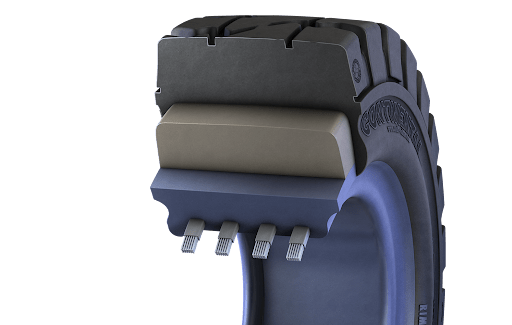
Solid tires are known for their extreme toughness and ability to handle heavy loads without damage. They are completely rigid, which often results in a harsher ride because they lack built-in flexibility to absorb impacts.
Semi-pneumatic tires provide a more balanced solution. While they maintain the durability necessary for demanding applications, their internal air pockets allow for some shock absorption. This balance makes them well-suited for tasks that require both resilience and a smoother ride.
Semi-pneumatic tires perform well in challenging environments with debris and sharp objects. Because they don't rely on air, they remain unaffected by typical punctures. This resilience makes them ideal for areas where sharp obstacles like nails or thorns are unavoidable, ensuring uninterrupted operation.
These tires simplify upkeep by eliminating the need to check air pressure. With no air to monitor, they don't need valves or worry about leaks. This straightforward maintenance approach lets users focus on productivity without the usual tire-related concerns.
As a cost-efficient option, these tires often come as complete wheel sets, reducing upfront costs. Engineered for longevity, semi-pneumatic tires use robust materials that withstand heavy use. Their design supports weight effectively without air, providing consistent performance and lowering long-term replacement costs.
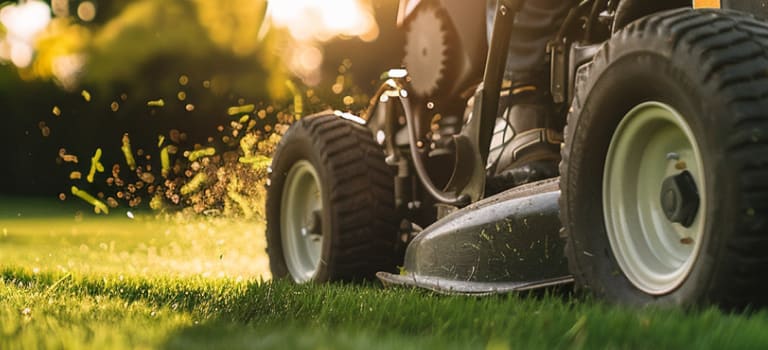
Semi-pneumatic tires are versatile and used where dependable performance and reduced downtime are vital.
These tires are ideal for lawn and garden tires applications like push mowers and utility carts. Their design navigates outdoor surfaces smoothly and handles typical garden debris effortlessly. Their solid construction offers a worry-free experience for home gardeners and landscapers alike.
In industrial settings, semi-pneumatic tires are used on equipment like hand trucks and warehouse carts. Their puncture resistance and ability to handle tough conditions make them suitable for demanding tasks. For mobility aids such as wheelchairs, they provide reliable performance without frequent maintenance checks.
Children's bicycles and ride-on toys benefit from the tire's robust design, allowing safe, uninterrupted use. In factories, these tires support industrial castors, ensuring that heavy machinery and equipment move smoothly.
When selecting a ** semi-pneumatic tire** for your equipment, consider these professional recommendations:
Starting with semi-pneumatic tires involves understanding your equipment's needs. First, review your equipment's manual to find the recommended tire sizes. Accurate measurements of existing tires are important to ensure compatibility and proper fit.
Opt for complete wheel assemblies to make installation straightforward and efficient. Keeping extra sets on hand for vital machinery can prevent interruptions and keep operations running smoothly. Also check the tires' load capacity. Match these ratings with your equipment's weight requirements to maintain safety and performance.
Semi-pneumatic tires offer a practical solution for equipment owners who value reliability and low maintenance over maximum cushioning. By understanding their unique benefits and limitations, you can make an informed decision that keeps your equipment running smoothly without the hassle of constant tire maintenance.
Ready to explore tire options that match your specific needs? We make it easy to shop for tires online and find the best deals with our extensive selection and expert guidance to help you choose the perfect tires for your vehicle or equipment.
Because semi pneumatic tires do not rely on internal air pressure, a small hole or puncture does not need to be repaired. The tire will continue to function normally. However, if the rubber tread or sidewall is severely torn, the entire tire should be replaced.
It depends on the application. Semi-pneumatic tires are lighter and offer better shock absorption than solid tires, making them better for lawn mowers and hand trucks. Solid tires are generally preferred for extreme heavy-duty industrial machinery where weight is not a concern.
Search By